

In The News
ASU and Thai partners advance semiconductor workforce development through faculty-led curriculum design
Bangkok, Thailand | January 2026
As Thailand continues to advance its national semiconductor strategy, Arizona State University (ASU) and Thai partners are strengthening collaboration through a faculty-centered program focused on curriculum innovation and workforce development.
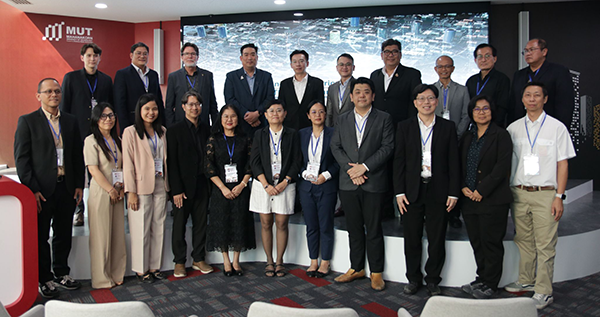
The initiative, led by Thailand’s Ministry of Higher Education, Science, Research and Innovation (MHESI) in partnership with Mahanakorn University of Technology (MUT), builds on the memorandum of understanding signed between ASU and MHESI in September 2025. Together, the partners are working to translate national workforce priorities into concrete, institution-level action.
From strategy to implementation
A key milestone under this collaboration was the Semiconductor Curriculum Design Clinic, a four-day, in-country workshop held in Bangkok that brought together faculty teams from ten universities across Thailand.
Designed as an intensive, hands-on experience, the program positioned faculty not simply as participants, but as institutional change makers responsible for shaping new semiconductor-aligned programs within their universities. Through structured design sessions, peer collaboration and industry-informed consultation, each team developed a Curriculum Action Plan (CAP) aligned with national priorities and local industry needs.
Throughout the workshop, faculty teams moved from early-stage concepts to implementation-ready proposals, outlining new academic pathways that support Thailand’s evolving semiconductor ecosystem. These proposals included plans for new undergraduate and graduate courses, stackable microcredentials for engineers and technicians, industry-embedded capstone projects and internships, and strategies for laboratory modernization and shared infrastructure.
Rather than operating as a traditional training program, the Design Clinic functioned as a collaborative design studio, encouraging cross-university dialogue and the exchange of ideas. Faculty participants tested assumptions, compared approaches and identified opportunities for collaboration across institutions.
Strong engagement from national leadership
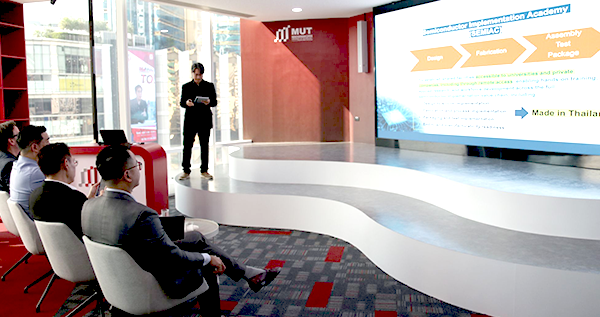
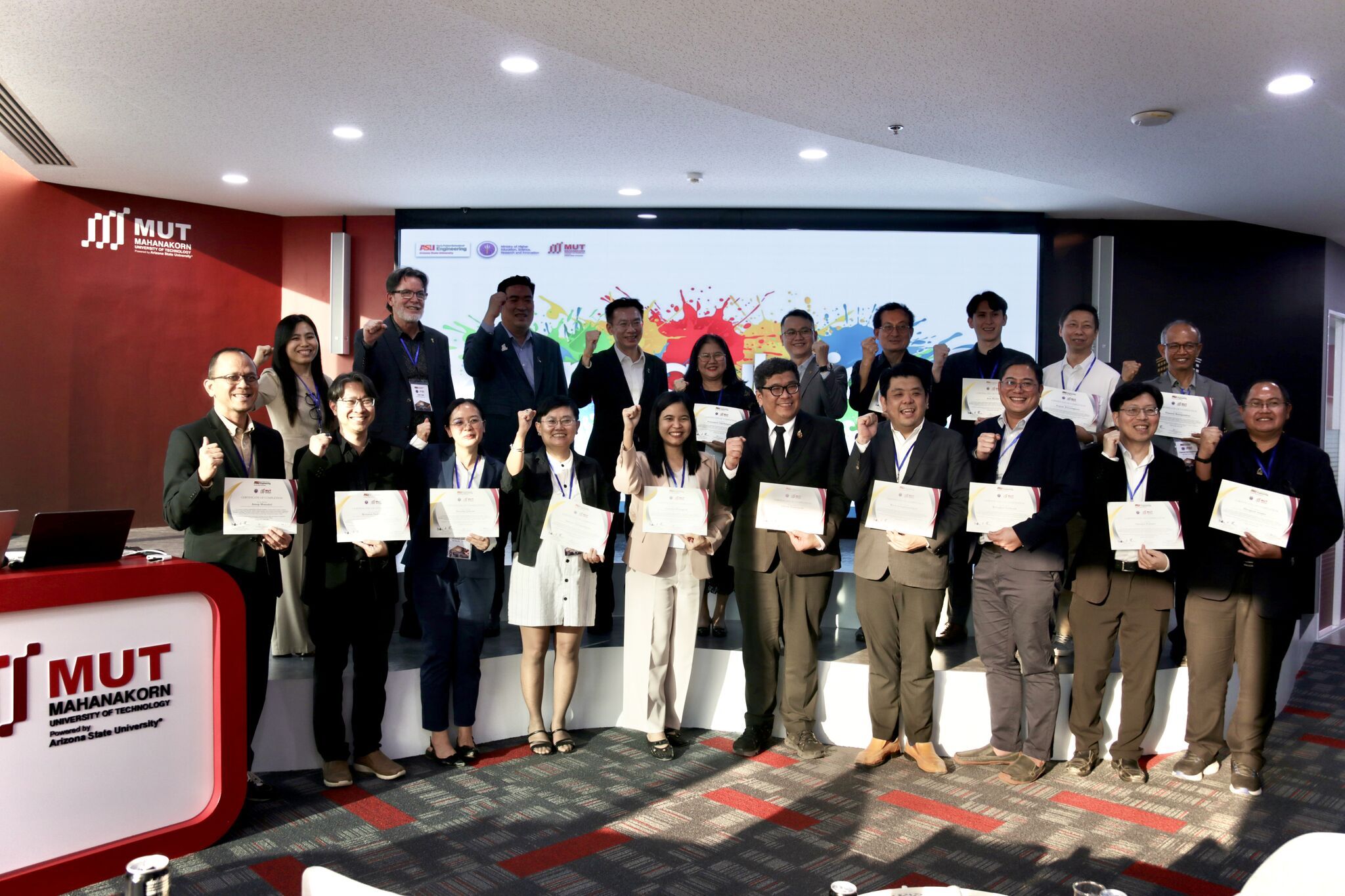
The program concluded with a formal Curriculum Action Plan showcase, where faculty teams presented executive summaries of their proposals to MHESI leadership and national stakeholders. The permanent secretary of MHESI attended the presentations and remained through the closing ceremony, highlighting strong government interest in the quality, ambition and scalability of the faculty-developed plans.
Next steps toward long-term impact
Following the Bangkok workshop, participating faculty teams will continue working with ASU instructional design experts to refine their Curriculum Action Plans, strengthen industry integration strategies and prepare for phased implementation. Outputs from this pilot will inform MHESI’s next steps for national coordination and future investment in semiconductor workforce development.
The pilot reinforces the partners’ shared commitment to building scalable, faculty-driven models that align academic innovation with Thailand’s long-term semiconductor and technology goals.
About Arizona State University
Ranked by U.S. News & World Report as the most innovative university in the United States for nine consecutive years, Arizona State University is a global leader in research, education and workforce development. Through partnerships that connect academia, industry and government, ASU advances innovation, economic growth and inclusive opportunity worldwide.