

In The News
From Strategy to Execution: How ASU Is Partnering with Thailand to Build National Semiconductor Capability
Through a growing collaboration with Thailand’s higher education and science leaders, Arizona State University is helping translate semiconductor strategy into workforce development, faculty innovation and regional training
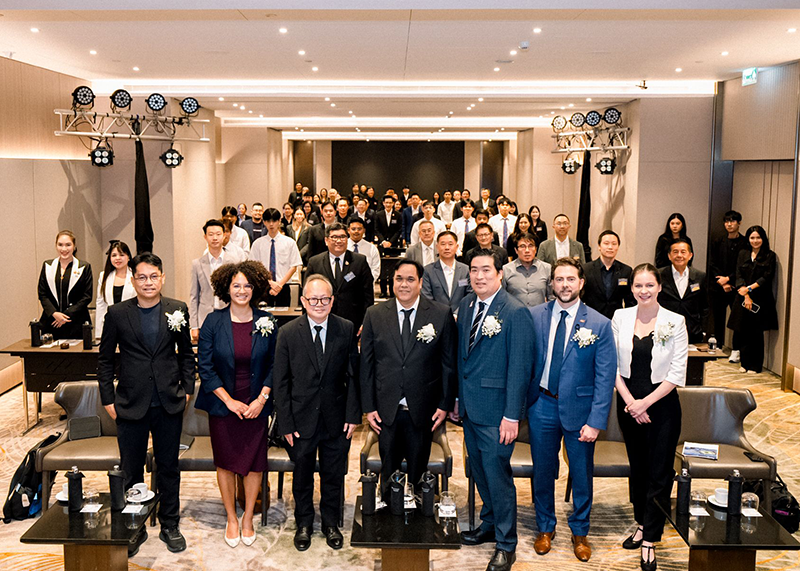
As countries across the globe move to strengthen their positions in the semiconductor value chain, Thailand is taking a coordinated, national approach — and Arizona State University is playing a key role in helping turn that strategy into action.
Through a partnership with Thailand’s Ministry of Higher Education, Science, Research and Innovation (MHESI), ASU is supporting the country’s semiconductor ambitions by aligning policy, workforce development, faculty capacity-building and training infrastructure into a single, connected pipeline. The collaboration builds on a memorandum of understanding signed in September 2025 that established shared goals around semiconductor education, talent development and innovation.
Rather than focusing on a single program, the partnership has been intentionally designed as a systems-level effort, connecting national priorities to universities, faculty and hands-on training environments.
“This roadmap is not intended to remain a strategic document. It is a framework for execution. Thailand’s competitiveness in semiconductors will depend on our ability to align policy with industry demand and education with workforce needs. Through coordinated collaboration with Arizona State University and national partners, we are advancing practical next steps that will translate strategy into sustainable capability.” said Professor Supachai Pathumnakul, permanent secretary of the Ministry of Higher Education, Science, Research and Innovation (MHESI).
From roadmap to action
A major early milestone in the collaboration was the Thailand Semiconductor Roadmap Co-Design Session, convened in January 2026 with participation from MHESI, Thai universities, industry stakeholders and the Semiconductor Industry Association (SIA).
“The path to strengthening semiconductor capabilities and building a world-class chip workforce begins in the classroom, not the cleanroom,” said Jaclyn Kellon, director of global policy at the Semiconductor Industry Association. “This partnership is a shining example of government-industry-university collaboration that will help promote greater growth, innovation and stability throughout the semiconductor ecosystem.”
The session focused on translating global industry insights into implementation-ready priorities for Thailand. While participants agreed that Thailand’s strategic direction aligned well with global best practices, the discussion underscored a critical challenge: success would depend on execution, particularly in workforce development, which emerged as the most urgent bottleneck.
Insights from the co-design session informed the next phase of ASU–Thailand collaboration, shaping a set of education and training initiatives now being implemented.
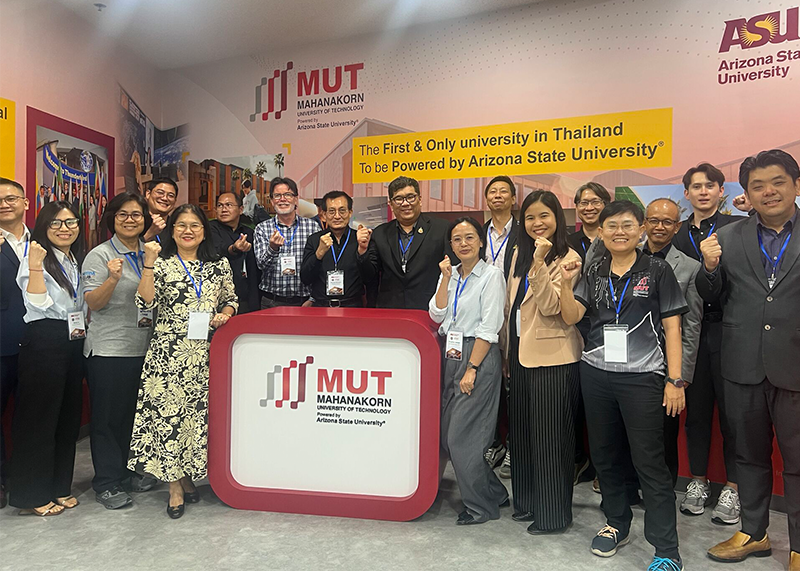
“For Thailand, semiconductor development must move beyond strategy documents into institutional transformation,” said Panavy Pookaiyaudom, president of Mahanakorn University of Technology. “At Mahanakorn University of Technology, we see this partnership with ASU as an opportunity to redesign curriculum, empower faculty and integrate industry into the classroom. Execution at the university level is where national ambition becomes real capability.”
In addition to aligning priorities, the Roadmap Co-Design Session served as a bridge between national strategy and implementation. Participants moved beyond high-level discussion to examine how policy direction could be translated into concrete actions within universities, training centers and workforce programs. The session highlighted the importance of coordinated execution — ensuring that curriculum development, faculty training and infrastructure investments advance together rather than in isolation.
Related content:
- MHESI Teams Up with Global Experts to Power Up Semiconductor Workforce
- Thailand Semiconductor Roadmap Co-Design Session—Workshop recap video
Investing in faculty as change makers
A central pillar of ASU’s work in Thailand has been faculty development, recognizing that long-term workforce capacity starts in the classroom.
Between October 2025 and January 2026, ASU delivered the Semiconductor Ecosystem Master Class, an eight-week program that brought Thai faculty members and professionals into a systems-level understanding of the semiconductor ecosystem from design and fabrication to packaging, testing and global supply chains.
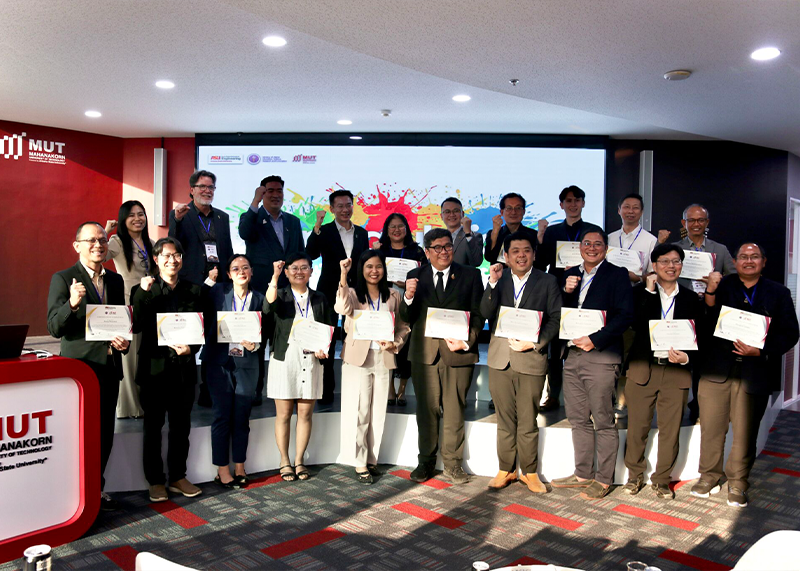
Building on the master class, faculty teams then participated in the Semiconductor Curriculum Accelerator, a blended program that combined virtual curriculum development with an in-country Curriculum Design Clinic in Bangkok.
During the four-day workshop, faculty teams from universities across Thailand worked with ASU instructional design experts to translate ecosystem knowledge into concrete, institution-specific Curriculum Action Plans (CAPs). These plans outline new courses, stackable credentials, laboratory-based training and industry-embedded learning models aligned with national priorities.
“The Semiconductor Ecosystem Master Class and Curriculum Accelerator provided Thai faculty with a systems-level understanding of the semiconductor industry, from design to global supply chains,” said Assoc. Prof. Dr. Wanchai Pijitrojana of Thammasat University. “Developing institution-specific Curriculum Action Plans with guidance from ASU experts enabled us to translate that knowledge into practical, nationally aligned programs that strengthen our educational impact.”
Expanding workforce pathways
Alongside faculty and curriculum development, the partnership is also focused on expanding workforce training pathways for engineers, technicians and early-career professionals.
Beginning in 2026, ASU and Thai partners plan to deliver a semiconductor packaging certificate designed to reach approximately 200 participants across Thailand. The hybrid program will combine asynchronous coursework with synchronous instruction to deliver practical, industry-aligned training.
In parallel, ASU will support in-country technical workshops and microcredentials, delivered by ASU faculty and industry experts. These short, hands-on programs will allow participating institutions to select technical focus areas — such as thermal management, materials, reliability or design — based on local needs.
Reimagining training infrastructure through TMEC
Another cornerstone of the collaboration is the transformation of the Thailand Microelectronics Center (TMEC).
Established more than two decades ago, TMEC has played an important role in Thailand’s semiconductor ecosystem but now faces constraints related to aging equipment. Working with MHESI, Mahanakorn University of Technology and industry partners, ASU is helping reimagine TMEC as a regional training and workforce development hub for Southeast Asia.
The new vision emphasizes hands-on training, industry-aligned curricula and integration with university programs, positioning TMEC not only as a national asset for Thailand but as a regional platform supporting the broader ASEAN semiconductor ecosystem.
“TMEC is ready to work with Mahanakorn University of Technology, Arizona State University and industry partners to leverage our existing equipment lines as a regional training platform for semiconductor workforce development in Thailand and Southeast Asia,” said Dr. Adison Tuantranont, director of TMEC. “We are focusing on training in legacy node applications such as MEMS, sensors and photonics, including sub-fab operations to maintain facility performance.”
Developing advanced talent
The collaboration also addresses the need for advanced research and innovation talent. ASU is working with Thailand’s Ministry of Education to support plans for 10 PhD fellowships in semiconductor-related fields aligned with national priorities.
The fellowship pathway is designed to connect Thailand’s long-term innovation goals with advanced training at ASU, while preparing future leaders to strengthen the country’s domestic semiconductor ecosystem.
Why it matters beyond Thailand
Together, these initiatives form a connected pipeline — from national strategy and roadmap co-design to faculty development, workforce training, infrastructure transformation and advanced research pathways.
While tailored to Thailand’s context, the model has been intentionally designed to be replicable. Lessons from Thailand are already informing similar efforts under development in the Philippines, Indonesia and Vietnam, as ASU continues to partner with governments and universities across Southeast Asia to build semiconductor capacity aligned with industry needs.
What we are building with Thailand is not a one-time initiative, but a scalable model for national semiconductor capacity-building,
Jeff Goss, associate vice provost at Arizona State University
“By aligning strategy, universities, industry and workforce development into a coordinated system, we are creating a framework that can be adapted across Southeast Asia and beyond. ASU is proud to work alongside Thailand’s leadership to translate shared ambition into lasting capability.”
By approaching semiconductor development as a national system rather than a collection of standalone programs, ASU and Thailand are demonstrating how international partnerships can move from vision to execution — with relevance far beyond a single country.